The Last Farms of Chelmsford
Looking at where farming stands today and whether there is still room for the next generation
Chelmsford began as a farming town. For centuries the landscape was shaped by fields, orchards, pasture, and working woods. Even today the stone walls running through the forests quietly remind us that much of the land we now walk through once grew crops or supported livestock.
The town looks very different today. Neighborhoods, roads, and schools now sit where farms once stretched across the valley. But agriculture has not disappeared completely. A number of places in Chelmsford still support farming in different forms, and those places help keep an important part of the town’s identity alive.
These remaining farms also raise an important question.
Is there still room in Chelmsford for new farmers to start?
What remains of Chelmsford’s farm landscape
A few areas in town continue to support agriculture, though often in ways that look different from traditional farms of the past.
Sunny Meadow is one of the most visible examples. The property brings together several uses in one location: farmland, community gardens, trails, pollinator plantings, and public educational programming. It is one of the few places where residents can actually see farming happening close to home.
The community gardens at Sunny Meadow are another important piece of the agricultural picture in town. Gardeners grow vegetables and flowers on individual plots, and the raised beds allow people with limited mobility to participate.
However, the community gardens are not intended to support commercial farming. They are strictly for personal gardening and educational use. For-profit farming is not allowed in the garden area, and starting in 2026, the rules limiting each participant to a single plot are being strictly enforced. The gardens remain an excellent entry point for residents interested in growing food, but they are not designed to function as starter farms or commercial growing spaces.
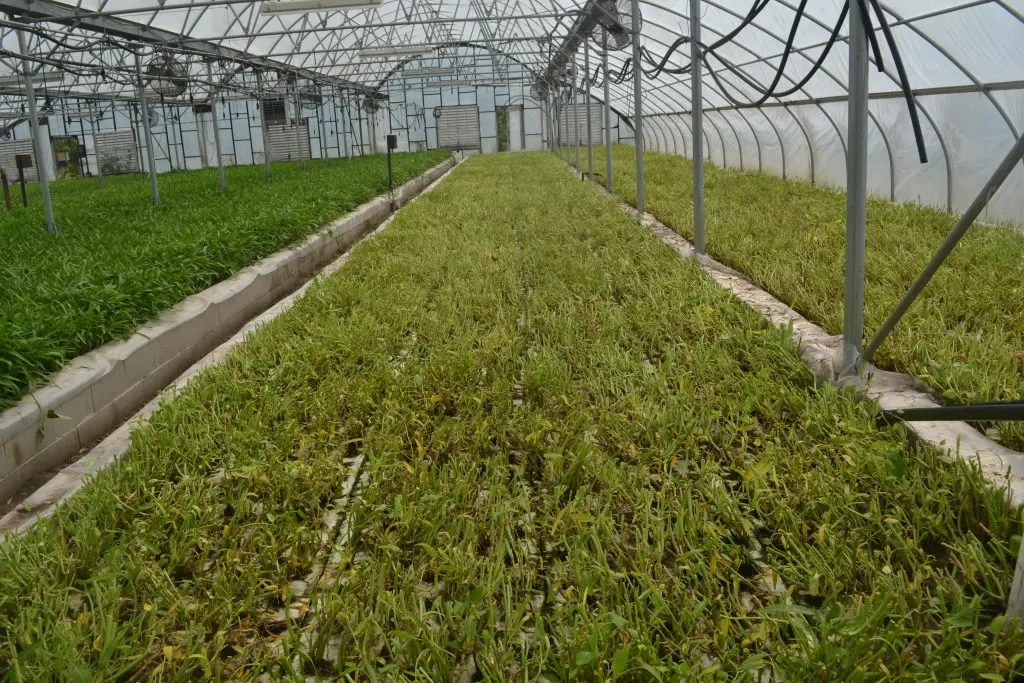
Elsewhere in town, smaller agricultural efforts continue quietly in different forms. Greenhouses, maple tapping, volunteer food growing, and programs like Grow-a-Row all contribute to keeping agriculture part of the Chelmsford landscape.
These efforts may be smaller than the farms that once dominated the area, but together they show that farming is still present in town.
A shrinking number of farmers
One thing that has become noticeable over the past several years is that the number of farmers in town does not appear to be growing.
In fact, it may be moving in the opposite direction.
Some long-time farmers have retired, and others have moved their operations to surrounding communities where land and agricultural programs may be easier to access. At the same time, it is difficult to point to many new farmers who have started operations in Chelmsford recently.
Some additional agricultural activity has appeared, but much of that growth has come from existing farmers expanding their operations rather than new farmers entering the field. In numerous instances this expansion happens through what farmers often call “patchwork farming,” where one farmer manages several smaller plots of land scattered across town or even across multiple towns.
This approach allows farmers to make use of land that becomes available, but it also reflects the reality that starting a wholly new farm operation is becoming more difficult.
The challenge facing small modern farmers
Starting a farm rarely begins with large acreage. Most farmers begin small, often experimenting with specialty crops or growing produce on a fraction of an acre while they build experience and markets.
The first challenge for any new farmer is land.
In many communities, municipal farmland is traditionally offered through multi-year leases. A five-year lease is common because it gives farmers stability. It allows them to invest in soil improvement, irrigation systems, fencing, and equipment without worrying that access to the land might disappear after a single season. Many agricultural grants and support programs also expect a signed lease of several years before providing funding or assistance.
Chelmsford, like many communities, has been shifting in some cases toward licenses rather than traditional leases for municipal farmland.
A license provides the town with more flexibility and control over how the land is used. It can be adjusted or changed more easily than a lease and does not carry the same long-term commitments.
However, that flexibility can come with trade-offs for farmers. Without the stability of a longer-term lease, some funding programs, grants, or regulatory approvals become more difficult to obtain. For farmers trying to build a long-term agricultural operation, that uncertainty can influence where they decide to invest their time and energy.
The missing middle in local agriculture
Another challenge is beginning to appear in many communities, including Chelmsford.
There is often a gap between community garden plots and larger farm areas.
Community gardens provide space for residents to grow food for personal use, but they are not structured for commercial production. Larger farm areas are typically intended for established farmers operating on multiple acres.
But some growers are looking for something in between.
These small-scale farmers may want a modest plot of land to grow vegetables, herbs, flowers, or specialty crops. These operations are sometimes referred to as small farms, starter farms, or artisan farms. They often begin with limited acreage while farmers build experience and local markets.
Currently, opportunities for these kinds of smaller agricultural start-ups can be limited.
In one recent example, a farmer looking for a small area to grow a crop ultimately moved the project to Tyngsborough, where programs supporting small starter farms were available. That kind of flexibility can make a difference for people trying to enter agriculture.
Wildlife pressure and the cost of farming
Another factor affecting farming in Chelmsford is wildlife pressure, particularly from deer.
Chelmsford has a high deer population, and deer need to eat. To a deer, a field of crops can look like a buffet. Protecting crops from deer often requires fencing that can be up to twelve feet high, which adds significant cost to starting or maintaining a farm.
Unfortunately, some of these fences have also been vandalized. When fencing is damaged or removed, crops can be quickly lost. Situations like this make it harder for farmers to grow a diverse range of crops.
As a result, some farmers turn to crops that deer are less likely to destroy. One of the more common examples is hay production, which is easier to manage without expensive fencing.
However, a diverse crop system is generally healthier both economically and environmentally. Growing a range of crops often requires better protection and security for the fields, something that can be difficult to maintain in areas close to neighborhoods.
A role for information and education
Chelmsford Open Space Stewardship does not advocate for any particular farming operation or agricultural proposal. Instead, the organization focuses on sharing information about agriculture, open space, and the possibilities that exist within the region.
By highlighting how farming works locally and in neighboring towns, residents and potential farmers can better evaluate their options and determine whether Chelmsford or a surrounding community may provide a path forward.
The broader goal is simple.
Encourage more farming where possible and help bring younger farmers into the region as many current farmers begin to retire. Agriculture depends on generational transition, and providing information about opportunities is one way to support that transition.
Looking ahead
Chelmsford still has land where agriculture happens. The question for the future is how the town balances flexibility in land management with opportunities for new farmers who may be trying to start small.
Some communities have experimented with creating spaces specifically for starter farms or artisan-scale agriculture. These plots can serve as stepping stones between community gardening and larger agricultural operations.
Whether that approach could work in Chelmsford is a question worth exploring over time.
Farming has shaped this town for centuries. The next chapter of that story may depend on whether the next generation of farmers can find a place to begin.
The answers are not simple, but asking is often the first step.
Transparency and educational note
This article is part of the educational series produced by Chelmsford Open Space Stewardship (COSS), a registered 501(c)(3) nonprofit organization. The purpose is to share information about agriculture, open space, and land use so residents and potential farmers can better understand opportunities and challenges in Chelmsford and surrounding communities.
COSS does not advocate for any specific farming operation, policy, lease, or municipal decision. The information presented is for educational purposes only and does not represent the position of the Town of Chelmsford, any town board, or any individual farmer. COSS receives no compensation from farmers or agricultural businesses for producing this content.