
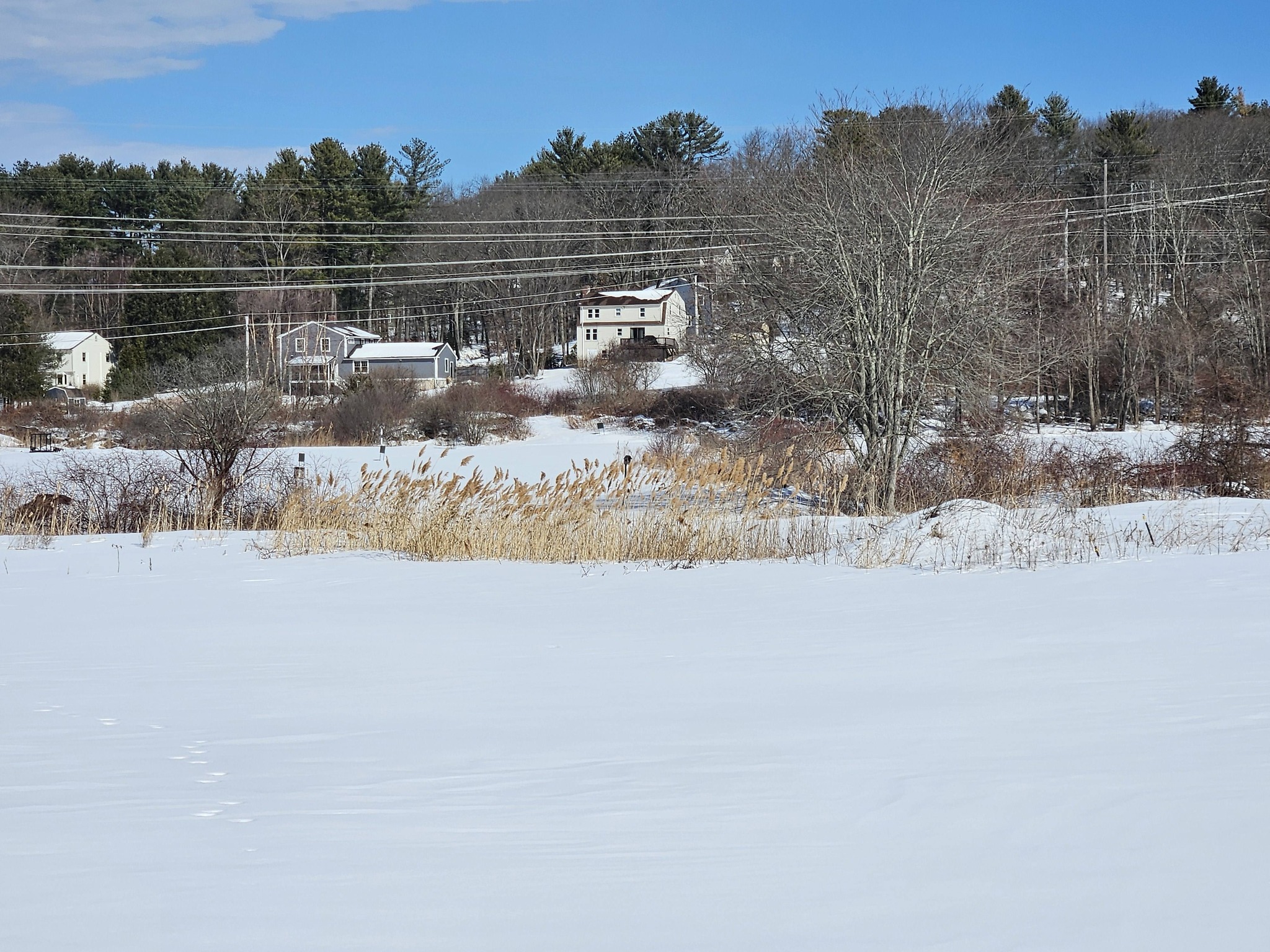
Due to winter restrictions still in place at Sunny Meadow, today’s walk had to jump through a few hoops to happen.
None of the internal access roads were cleared, and the typical farm road across the property could not be opened. Plan B became the original farm road off Route 27, which had been cleared yesterday. Even then, we were concerned someone might get stuck heading up or down unless they had a 4×4 truck.
So we shifted again and parked at Busa Farm.
I have chatted briefly with them before, but today we actually had time to talk. Really nice family. Two generations working at Sunny Meadow. They grow greens for farmers markets and restaurants. Fresh organic winter greens, artisan varieties, and they seem to be doing well. Saturday is a major pickup day for farmers markets and restaurants, so we made sure to stay well out of their way.
Overall, it all worked out.
But while I was on that side of the farm, my spidey-sense went off.
A few really nice trees along the road have heavy bittersweet climbing into them. I also spotted a medium-sized patch of phragmites in the field that looks new.
During my conversation with the farmer, I mentioned how COSS has been supporting farmers and doing invasive mitigation work for over 20 years. He said they had some invasive issues. I jumped right in. The vines in those three trees? The phragmites in the field? Solid yes.
He said he did not know who he would even call to remove it. Since it is privately leased land, it would most likely fall to the leaseholder to manage.
I told him we would be happy to add it to our list and help.
The trees can absolutely be saved if we cut and manage the bittersweet properly. One of them is a beautiful cedar and well worth protecting.
Now let’s talk about phragmites.
Phragmites is one of the most aggressive invasive plants in New England. It spreads through underground rhizomes that can travel many feet in all directions. What starts as a small patch can turn into a dense monoculture in just a few seasons. Once established, it crowds out native grasses, wildflowers, and wetland plants. Wildlife habitat declines. Water flow can be altered. Drainage systems can clog. Fields and wet areas become nearly impenetrable.
It is especially dangerous near ditches, streams, and farm drainage systems because it follows water. If it reaches a drainage corridor, it can spread rapidly across an entire property and even onto neighboring land.
Early intervention is everything.
Small patches can sometimes be controlled with careful hand pulling before the root network becomes too established. Disposal must be handled correctly, often by burning or securely covering the material so fragments do not re-root. Once it becomes a large stand, removal becomes significantly more expensive and complex.
This patch appears manageable now. That window does not stay open forever.
Nothing bonds COSS and farmers more than invasive elimination.
So keep an eye on the Route 27 side of Sunny Meadow. If you see a group working in the trees or managing a controlled burn in the field, that will likely be us.
Farmers helping farmers. Volunteers helping farmers. This is how we keep agriculture strong in town.