I review a lot of Eagle Scout projects, and I honestly find something interesting in almost every one of them. Even after all these years, I still learn new things. This particular project made me stop, think, and go back to look up a few items to make sure the advice I was giving was correct. I actually like that. If I am going to advise Scouts and volunteers, I should always be learning, questioning assumptions, and making sure what I say is accurate.
This post is not tied to any specific Scout, troop, or permit. It is simply an example meant to help others understand when a project crosses from a simple build into real infrastructure, especially in Massachusetts.
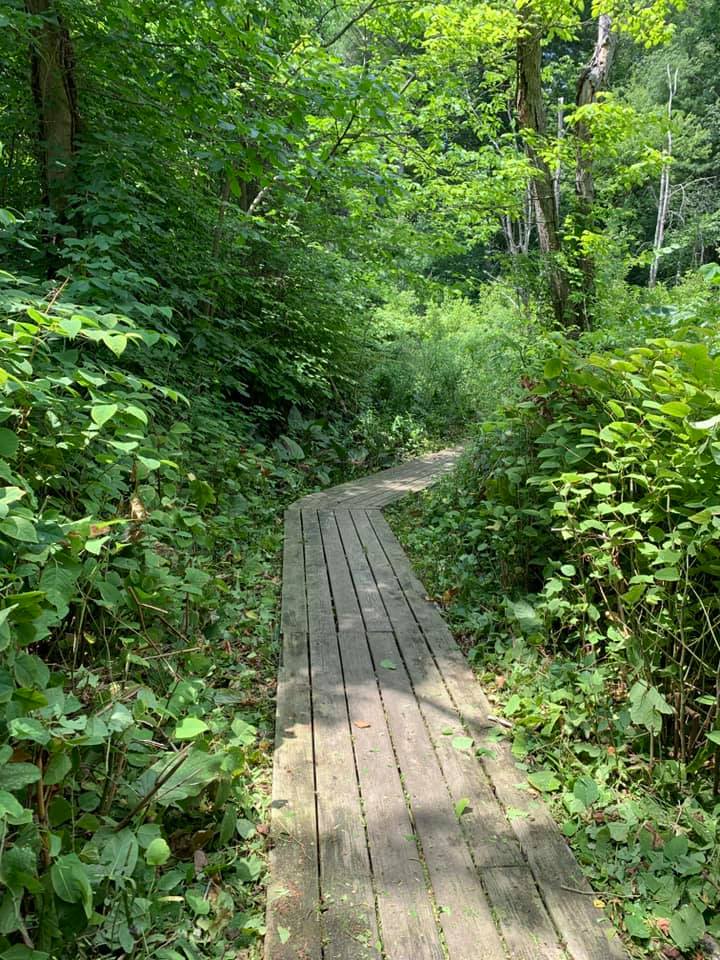
The example involves a pedestrian crossing in a wet area. Sometimes it is described as a bridge, sometimes as a walkway, and sometimes as a boardwalk. The labels matter less than the impact and function.
In Massachusetts, there is no single statewide rule that says a structure over a certain length automatically requires an engineer. Instead, decisions are based on a combination of length, width, location, and how the structure will be used. That can be confusing, so I want to explain how this is typically looked at in real life.
The simple way to think about it is this. Minimal trail features are often treated as minor improvements. Larger structures are treated as real infrastructure. Once you cross that line, an engineer is usually required.
Length and span are one of the first things reviewers look at. Short crossings, usually under about 10 to 12 feet, can sometimes be handled as minor trail improvements if everything else is simple. Once you get to around 15 feet, structural questions start to come up. At 20 feet and beyond, especially as a continuous span, most towns and land managers in Massachusetts will treat the structure as a bridge, regardless of how it is labeled.
Width also matters. Narrow crossings around 2 feet wide are usually meant for one person at a time. Once something is 3 feet wide or more, it is clearly intended for regular public use. That means people passing each other, kids, dogs, runners, and possibly bikes. That increases load and safety expectations.
Wet areas and wetlands change everything. The moment a structure crosses wet soils, wetlands, or flowing water, the level of review increases significantly. Wetland soils are soft and unstable. Water levels change. Root systems, drainage, and hydrology all matter. Even a relatively short structure can require engineering if it is in the wrong place.
Height is another factor people often ask about, especially with boardwalks and walkways. A structure that is only 1 to 3 feet off the ground may sometimes receive a lighter review if it is short, supported frequently, and does not cross water or alter drainage. These are often treated as trail surfaces rather than bridges.
However, being low to the ground does not automatically remove the need for an engineer.
A long structure over wet ground still concentrates weight and still affects soils and water movement. Length, not height, is often the deciding factor.
A good example is a walkway that is about 30 feet long, roughly 3 feet off the ground, crossing a wet or seasonally wet area, with pipes underneath to allow water to pass. Even though it is not very high, this would almost always be treated as engineered infrastructure in Massachusetts.
At 30 feet long, the structure is well beyond what is typically considered a minor boardwalk. Wet soils can compress and shift. Posts can settle unevenly. Trip hazards can develop over time. Adding pipes underneath does not simplify the project. It actually adds complexity. Once pipes or culverts are involved, reviewers need to know that water flow will not be restricted, that the pipes are properly sized, that they will not clog with sediment, and that they will not cause erosion at the ends. Those are engineering questions.
Public use matters as well. A 3-foot-wide walkway that is 30 feet long is clearly intended for regular public access. When something is built for long-term public use, the expectation is that it meets a higher safety and durability standard, whether it is built by a town, a nonprofit, or volunteers.
Massachusetts does not use one fixed number because wetlands are not all the same. A 12-foot structure in one location might be harmless. The same structure somewhere else could cause real damage. That is why decisions are based on impact and function, not just measurements.
As a rule of thumb in Massachusetts, narrow ground level structures under about 10 to 12 feet may sometimes be considered minor. Once you reach 15 feet, questions start. At 20 feet and beyond, especially over wet areas, an engineer is almost always expected. A width of 3 feet or more signals regular public use. Any span over wetlands or water raises the bar significantly.
The takeaway for Eagle Scout projects and volunteer efforts is not that things are getting harder. It is that recognizing when a project has crossed into real infrastructure early on saves time, avoids redesigns, and protects both the environment and the people building it.
Using approved or engineered designs is often the fastest and safest path forward. Knowing when to ask those questions is part of good project leadership.
This project made me pause and double check my own assumptions, and that is a good thing. If I am going to keep advising others, I should always be learning right along with them.
To be honest, I have built a few bridges longer than this in the past, including one at Wright and one at Lime Quarry, and at the time I was never asked about an engineering plan when approval was given. That reflects how things were handled then. Expectations and standards change over time. Moving forward, this is something I will ask groups and Scouts to consider early in the planning process, especially for longer spans or structures in wet or sensitive areas. To be safe, for any structure over about 15 feet in length, I will ask that they obtain written confirmation that an engineering plan is not required.