Farming in Chelmsford has changed a lot, even just in the last 20 years I have been watching it.
Twenty years ago we still had some larger farms. Warren Farm, Lewis Farm, Parlee, and a few others. Today that model is mostly gone. What we have now is a patchwork of smaller farms, more artisan in nature, and focused on farm stands and farmers markets. That is not just Chelmsford; that is happening in many surrounding towns.
Some crops we used to see here, like corn, are not really grown in town anymore. That has shifted to places like New Jersey and western Massachusetts, where it can be done at scale. If towns want to keep farming, they have to adapt to that reality.
Wotton Street and Sunny Meadow are good examples of that patchwork. Sunny Meadow has actually been that way for a long time. Originally it was corn, just like Red Wing. Then strawberries for a period. Then it broke into different uses with the horse stable, which is now the public area, and the Jones and Chey leases. When the town purchased it, there were three agricultural leases, and the old horse area became the family-friendly space with the community gardens added in.
It is not easy to manage, but it can be done. It takes a lot of understanding. You have to know the farmers, what they grow, what they need, and what residents expect to see from their investment. Sunny Meadow is really one of the only places where you can go on a farm tour, have a picnic, see a concert, attend an event, and have scouts using the space all at the same time.
Where it goes in the future is up to the residents. I keep hearing talk about a single lease. That might sound simple, but that would be a big change, and something residents would need to support. Even closing the site in the winter was tried this year and had very mixed results.
I am going to start talking more about the farmers on the site, who they are and what they do.
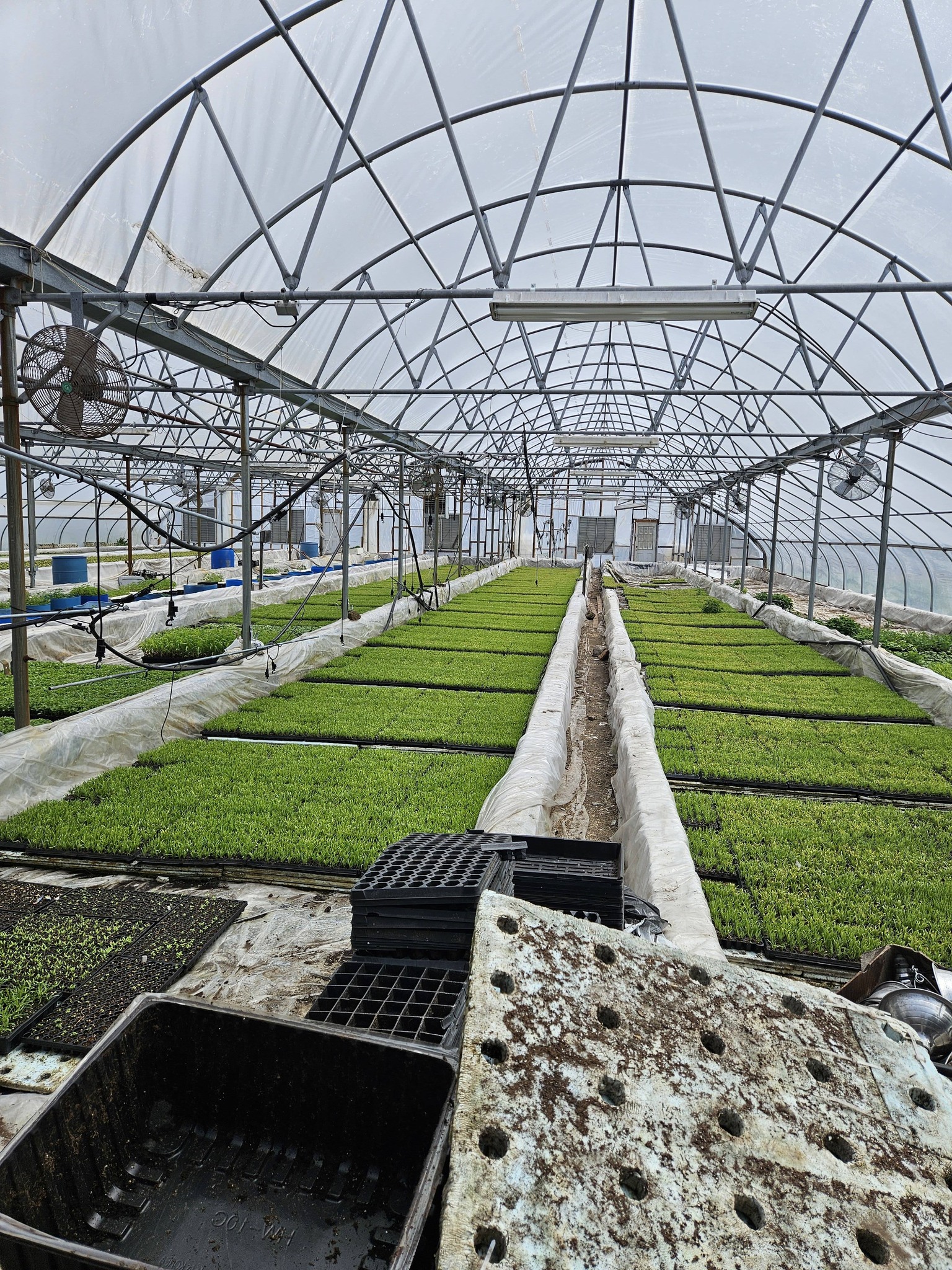
Chey Farm is one of the original legacy leaseholders. They built the large greenhouses and have maintained them over the years. They grow Asian greens hydroponically. For a long time that was done year-round with heated greenhouses. That worked for decades, but things changed. More growers entered that space, and the cost of heating with gas went up. It is no longer economical to grow year-round, so now they grow mainly in the summer.
Water is always a factor. The pond is dredged, but every few years it still gets low enough that it cannot be used. The pond water is used to fill the hydroponic tanks, but not directly on the crops. Town water is used on the crops because greens can pick up anything in unfiltered water on the leaves, and that is not ideal.
Now they are also experimenting. Some greenhouses are being switched from hydroponics to soil growing. Hydroponics requires fertilizers in the water, and those costs have gone way up. Soil growing may produce a comparable product with lower input costs. Like any farmer, they are adjusting constantly to try to stay profitable.
They are not making big money. They are working hard to keep their heads above water.
Community volunteers help. The town installing a new irrigation system helped a lot. I am over there often, just talking, checking in, and helping when I can. Sometimes that means watching for frost, sometimes helping fix a greenhouse, and sometimes getting a group together to rebuild one after damage.
I do not know how much longer they will stay. And I do know if it ever goes to a single lease, they would not be interested in holding that. They just want to grow their crops in their area and focus on that.
That is why small patchwork farming is important. Some farmers come and go. Some try it and realize how hard it is. Some stay for years. Some grow and expand. Some are just passionate about it. There should always be a mix of new, stable, and those getting ready to step away. Farmers, like crops, have seasons.
Access is also different with each farmer. Chey allows people to walk on some of their roads and even allows the storybook trail to cross their leased land. Others do not allow access at all. Some allow tours. It can feel messy at times, but that is farming.
Yesterday I spoke with three of the farmers on site. Sometimes they ask if I know what is going on; sometimes it is just a conversation about the season, what they are planting, what they need, and what help might be coming. It is always different every year, and it is always a learning experience.
That is why the tours matter. They reflect what is actually happening that season. I always think of it like a kitchen tour at a restaurant, except we are outside looking at how the food is grown before it ever gets to the table.
I teach K to 8, so explaining things and walking people through a process is second nature to me. Farm tours will start in June. I will work with the farmers to see who wants to be part of it and make sure I understand what is new so I can answer questions and give people a real look at what is happening.
Chelmsford is still a farming community, but only if we support it. If we lose our farms, we lose a big part of what makes this town what it is.
Whatever happens next, I will keep pushing to support the farmers, protect open space, and keep these areas family-friendly.
See you at the first tour in June.