Spring is always a time for looking forward to new life and energy. It is also a time to look back at what was, what is, and what can be. I recently came across some old photos of Sunny Meadow from more than fifteen years ago, and my mind started racing.
Those pictures reminded me just how far this place has come.
What made Sunny Meadow so special?
It started with its roots. And honestly, it started as a mess.
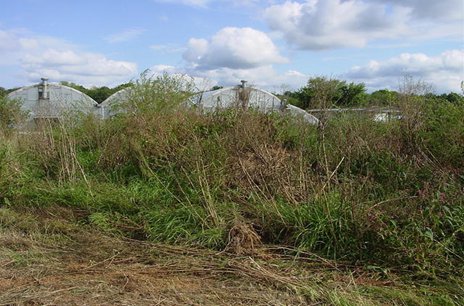
The property was hugely overgrown. There were abandoned structures, broken fences, weeds higher than your head, a broken-down horse-riding area, farmland covered with invasives, and farmers who were struggling to keep things going. These photos show what it looked like back then.
After the COSS work to restore Red Wing, which was as well once a mess, we were asked to see what we could do at Sunny Meadow.
The first step was changing the name. At the time it was known as the Lewis Property. We worked to return it to its original name, Sunny Meadow. It took many meetings and suggestions, but once that name was restored, it gave the site an identity and something people could connect with. Now we had a name and something to anchor the site with and generate excitement.
Old buildings needed to be removed, and local companies stepped forward to help remove the structures and load dumpsters. With the buildings gone, the real work began.
Back then it was just a handful of us with gas-powered brush cutters, loppers, rakes, and sometimes a tractor. A pretty old-school New England volunteer crew. Those brush cutters could chew through vines and saplings like nothing. I honestly do not think some of those machines would even be legal today, but when you are staring at fields full of bittersweet and brush higher than your head, you use what you have and keep moving.
Field after field had to be cleared. It was a gigantic task that probably should have been contracted out, but in those days open space was still on the back page of the paper, not the front like it is today.
A few local contractors came in and helped when they could, and generous residents donated equipment that we kept on site so work could continue. And it did, for months. Slowly we reclaimed field after field, all with no town money.
The old horse riding area was dismantled, but you can still see a piece of its history today. The bridge from the obstacle course was moved to the bog area because we needed a bridge somewhere else and had no money to build one.
Then came the fencing. Lots of fencing.
We bought raw pine from local lumber mills, painted it ourselves, and installed the posts and rails. It was never meant to be a heavy livestock fence. It was more decorative, but it helped restore the look of the farm.
Company work day teams came out over the next few years and helped install and paint the fencing. Eventually the entire fence system was finished. Years later it all needed repainting, and we organized a Town Sayer Paint Day. About 75 people came out and helped repaint the fences. It was a great day and a good example of what the community can do when people pitch in.
Next came the community gardens.
Chelmsford had tried several times to build gardens at Red Wing, but it never gained momentum. COSS flipped the idea on its head and decided if you build it, they will come.
Most community gardens cost around sixty thousand dollars to build. I think the total cost for ours was about three thousand.
Once the community garden was completed, we held a meeting at a local farm, and all forty plots were gone in under ten minutes.
From the beginning the garden had a mandate that ten percent of the plots would grow food for people in need. I believe that program is still active, and it should be.
Water was a challenge at first. Gardeners had to bring their own, and that became difficult for older gardeners. With a little outreach, we installed a solar pump and a single tank. It was not perfect, and people still sometimes had to bring water, but it worked. Eventually the town installed a fully pressurized water system.
The gardens continued to grow. One became two, then three, and eventually a garden on Wotton Street was added.
COSS is proud of getting the gardens built and maintaining them until 2025 when they finally became self sustaining. I will not miss those summers fixing pumps in ninety degree heat or worrying about the pond being dry or covered with algae.
Many other improvements followed.
A peony garden was planted with about two thousand blooms.
A road from the parking lot to the garden was built.
Three sheds were installed including one in the garden.
A washing station was added.
A concert area was created.
We planted a cutting from the purple beech on the Town Common and it now grows on the site.
Disease resistant elm trees were planted.
Areas for scouts were built.
Tables were added.
Six pollinator gardens were created.
Farm roads were upgraded and improved.
We also built a workshop where volunteers could fix equipment and build projects for open spaces around town.
A wood rack allowed donated wood to help offset the costs of open space projects.
A community tool shed allowed anyone who wanted to help maintain the farm or other open spaces to have access to tools.
Sunny Meadow became a thriving hub for residents.
Summer concerts were added.
Educational tours were held.
Scouts camped on site in all seasons.
Twenty two Eagle Scout projects were completed there.
It was an amazing place.
Like everything, though, things move in cycles.
Some of those activities are gone for now. The Eagle projects are fewer. The Girl Scout bluebird sanctuary is gone. The wood rack and community tool shed are no longer on site. The workshops now mainly support the farm.
Winter use has mostly stopped. No more winter walks, camping, or use of the storybook trail. Winter projects in the workshops no longer happen.
But like everything, I expect some of that to return in a few years. Maybe we will finally get a full Recreation Department back in Chelmsford and they can help lead some of these programs again. You can be assured COSS will be right there ready to help in any way we can.
Sunny Meadow still has enormous potential.
We still have summer concerts and scout use, although it is more limited. The flower gardens are still there. The grass is still being cut and farmers are still supported.
The community tool shed was moved to a local church that believes in the mission of providing tools for people who want to help improve our open spaces.
Educational walks will always happen.
Six great concerts are already scheduled for 2026.
These may not be the glory days when everything was happening at once, but Sunny Meadow still provides many opportunities.
Some of the winter activities that no longer happen there may find a new home at Koulas Farm or Roberts Field as new initiatives begin to take shape.
So look at these photos. See how it started. Remember its amazing peak. And appreciate where we are today.
Sunny Meadow remains a key place for recreation, education, and farming in Chelmsford.
And I see a bright future just down the road.