People might ask why I am posting this now, and the honest answer is that a few separate threads all landed on the same issue at the same time.
The first nudge was a complaint I received about the bat box at Sunny Meadow. The concern was not about bats at all. The concern was that it had become a breeding area for invasive birds and that those birds were outcompeting the bluebirds. That is the kind of comment that makes you stop and look closer, because it points to something bigger than one box on one property. It raises the possibility that a structure installed as a positive wildlife improvement has quietly crossed over into the negative column.
Once I started looking with that lens, I could not unsee it. At Roberts Field, I took a closer look at the bat boxes there, and I can see holes and weathering. Maybe they are still functional. Potentially they are not. But visible openings matter for bat boxes because these structures depend on stable internal conditions, and drafts and gaps can make them unusable. Massachusetts guidance specifically notes that bat houses may need new caulk and paint after 3 to 5 years to prevent leaks and drafts and that maintenance should be done when bats are not present, which in Massachusetts is typically November to early March.
At the same time, whenever I am out removing bittersweet, I keep finding birdhouses that were installed long ago and then abandoned. Some are still hanging. Some are on the ground. Others are half swallowed by vines. They are like archaeological artifacts of good intentions. Someone built them, carried them out, and put them up, and then the long part of the job never happened.
Then came the third thread. There is a push right now to add new duck boxes. I was asked about it, and as usual people focused on the excitement of adding something tangible and positive. I understand the excitement. Habitat improvements are a good thing. But my first question was simple. Who is going to maintain them, and what is the plan to remove them if maintenance stops.
That question matters because for nest structures, installation is the easy part. Maintenance is the project. Without a maintenance plan, what begins as conservation can drift into something that creates unintended harm.
This is not just opinion. The organizations that specialize in these structures say the same thing in plain language. Bluebird monitoring groups emphasize that nest boxes must be actively monitored and that unmonitored boxes can do more harm than good by increasing populations of exotic competitor species. Ducks Unlimited is equally blunt about wood duck boxes. They stress that if you put the box up, you must maintain it every year, and they warn that boxes can become death traps if not cleaned out properly after each breeding season. Massachusetts guidance on bat houses focuses on sealing and repainting cycles and the timing window when you can do that work without disturbing bats. The common thread is responsibility over time.
So yes, this is very much valid for Chelmsford, Massachusetts. The species involved are present here, the climate accelerates weathering, and the maintenance windows and failure modes are precisely the ones described by Massachusetts- and New England-focused guidance.
The lifecycle begins with a real benefit.
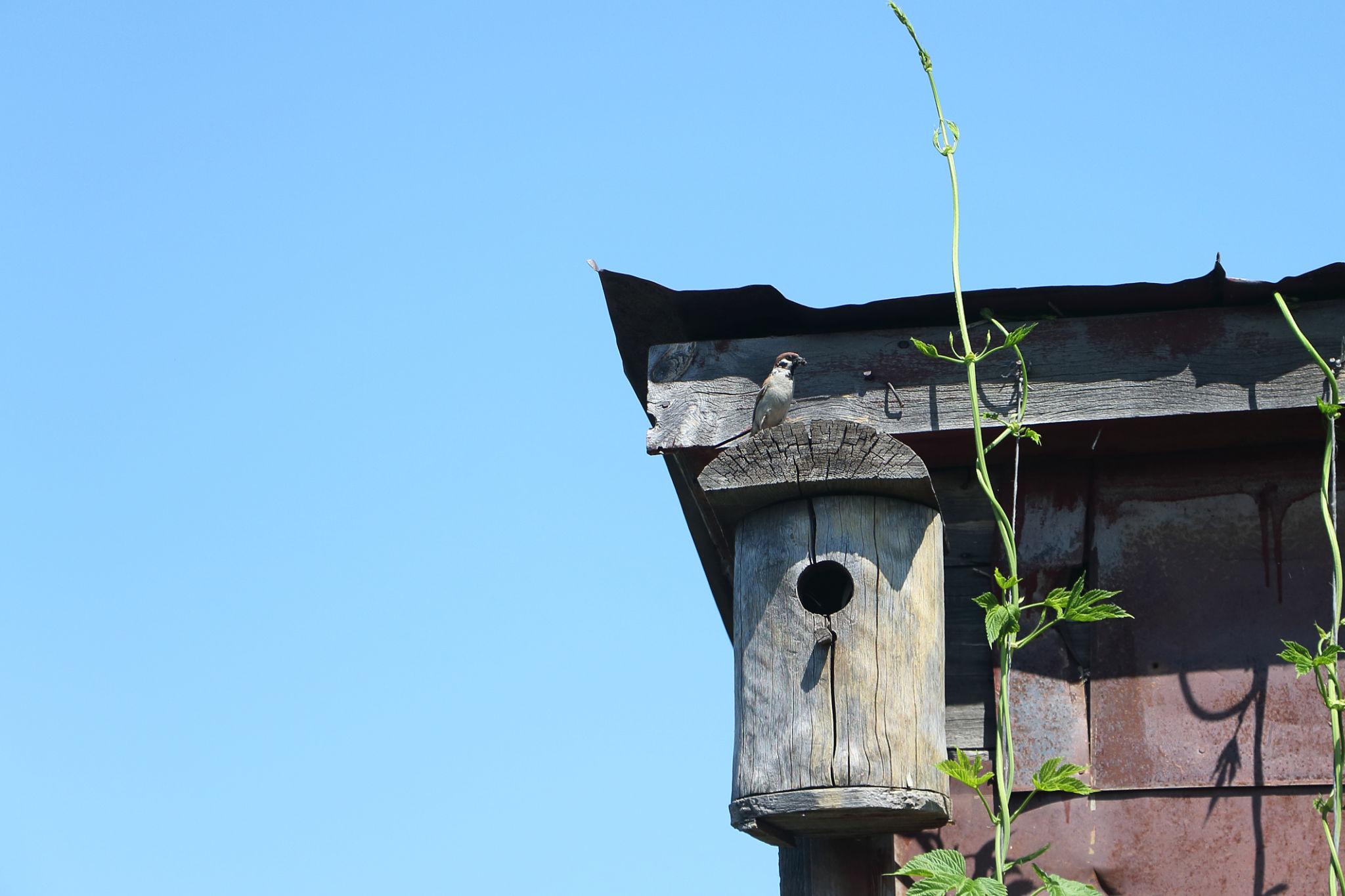
Birdhouses were created to compensate for the loss of natural cavities in older trees and snags. A well-designed box placed in the right habitat and monitored during the season can support native birds. But monitoring is not optional. When monitoring and cleaning stop, old nesting material accumulates, parasites build up, moisture stays trapped, and the entrance hole enlarges. At that point the box stops being targeted habitat and becomes general shelter.
General shelter favors aggressive competitors like the house sparrow and the European starling, both documented invasive cavity nesters that compete directly with native birds and can destroy nests. A deteriorating box unintentionally shifts advantage toward species we are not trying to support.
Bat boxes follow a similar arc. They are microclimate devices. Temperature stability, airflow, and internal texture determine whether bats use them. When seams open or wood warps, the internal environment changes, and bats abandon the structure. Massachusetts guidance makes clear that repainting and sealing are part of the expected lifecycle. Once abandoned, the box often becomes occupied by insects or small mammals. The visual presence of the box suggests habitat exists when functionally it does not.
Duck boxes are the clearest example of maintenance being inseparable from design. A working wood duck box requires annual inspection, cleaning, and fresh nesting material. When maintenance stops, the box can become unusable or act as a predictable target for predators. Concentrating nests into a failing structure increases risk instead of reducing it.
Across all three types, decline is gradual and easy to miss. Enlarged entrance holes, warped panels, open seams, insect nests, leaning mounts, and trapped moisture are early indicators that the structure is drifting away from its intended function. If caught early, many of these issues can be corrected. If ignored, the structure eventually crosses a line where it is no longer neutral.
This is where residents can play a real role.
We already have the eyes and boots on the ground. The first step is simply identifying where these abandoned or aging structures are. Right now is actually one of the best times of year to do that. With the leaves down and the green gone, boxes that were buried in bittersweet, shrubs, or tree canopies suddenly become visible. You can spot them tucked into brush lines, half hidden in vines, or hanging in trees that looked empty all summer.
If residents start flagging locations, each structure can be evaluated based on current condition and ecological function. Some will still be helping. Some will be neutral. Others may need correction. Once we know where they are, informed decisions can be made. Some will be repaired. Some were replaced. Others retired. The goal is simple. Keep the positive ones positive.
Rehabilitation is often realistic when a structure is still sound. Birdhouses can be cleaned, repaired, and returned to active monitoring. Bat boxes can be resealed and repainted during the safe maintenance window. Duck boxes can be cleaned and reset as part of an annual cycle. But that only works if someone owns the schedule.
Retirement is the responsible step when a structure is beyond repair or when nobody is willing to commit to ongoing care. That is not a failure. That is lifecycle management. A structure that no longer helps wildlife should not stay in place just because it once did.
The key distinction is between physical lifespan and ecological lifespan. A box can remain hanging for years while becoming ecologically counterproductive much sooner if it is not maintained. Conservation is about function, not artifacts.
I am not against installing bat houses, birdhouses, or duck boxes. I support habitat improvements that are done responsibly. But responsible installation includes a plan for inspection, maintenance, and eventual retirement. Improvements should stay improvements. When they stop adding to the positive column, they need to be repaired, replaced, or removed.
Chelmsford has a strong volunteer culture. We have Scouts, friends groups, and residents who care deeply about our open spaces. Identifying and evaluating existing structures is a place where that energy can immediately translate into better outcomes for wildlife. It is quieter work than installing something new, but it is the work that keeps conservation honest.
Wildlife benefits from consistency more than enthusiasm. If we match our excitement for new projects with equal commitment to long-term stewardship, the landscape is better for it. And if we are willing to retire what no longer works, we make room for improvements that actually stay in the positive column.
That is the mindset behind this post. Not to slow things down, but to make sure what we build today is still helping tomorrow.
Chelmsford Open Space Stewardship is a registered 501(c)(3) nonprofit organization focused on conservation education and volunteer stewardship.
This post has been reviewed for 501(c)(3) compliance.
COSS does not speak for, represent, or have an official connection to the Town of Chelmsford.